This post may contain affiliate links and ads in which we may earn a small percentage of purchases.
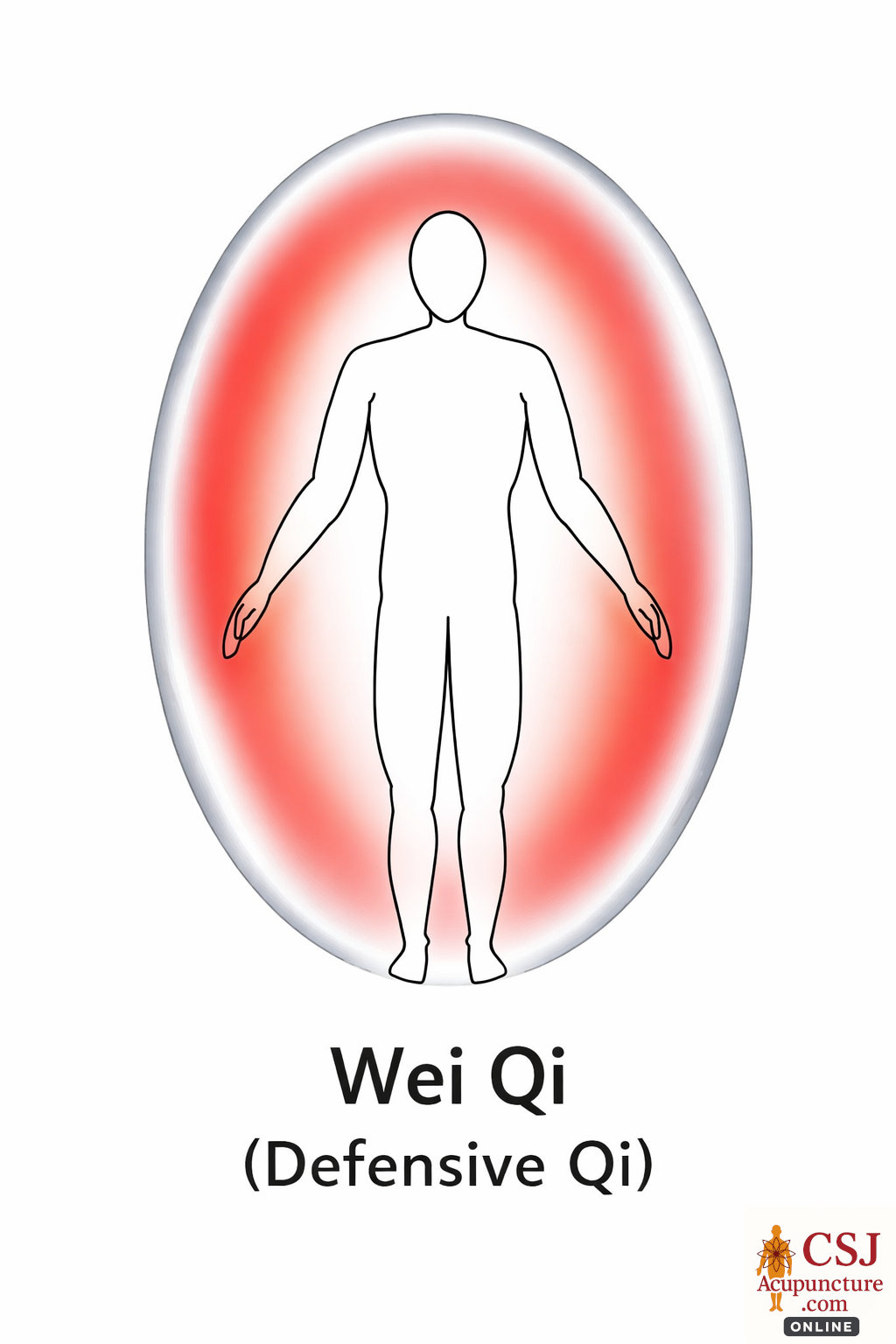
In Traditional Chinese Medicine, Wei Qi, also called Defensive Qi, plays a central role in protecting the body and maintaining physiological balance. It is often compared to aspects of the immune system from a biomedical perspective because it helps the body resist external pathogenic influences such as wind, cold, heat, and dampness.
However, Wei Qi in TCM is more than just a protector of the body, it is a dynamic, functional concept that integrates protection, temperature regulation, and interaction with the external environment.
Quick Links
Origin of Wei Qi
Wei Qi is classified as a form of acquired Qi, meaning it is generated after birth. After birth, Zong Qi, Ying Qi, and Wei Qi are all derived from food essence and are therefore considered postnatal forms of Qi.1
It is produced through the transformation of food essence, also called Gu Qi, by the functional activity of the Spleen and Stomach. From this process, Ying Qi nourishes the body from within the vessels, while Wei Qi circulates outside the vessels.
This distinction is important because Ying Qi has a nourishing function internally, while Wei Qi acts more externally, helping the body respond to the surrounding environment.1,2
Watch the full video here on Youtube: What Is Your Defensive Wei Qi?
Circulation of Wei Qi
Unlike Ying Qi, which flows within the blood vessels, Wei Qi circulates outside the vessels in the superficial layers of the body, especially between the skin and muscles.
Its movement is considered relatively fast and active, which allows it to respond quickly to changes in the external environment. Classical Chinese medicine describes Wei Qi as moving through the exterior during the day and returning inward at night, reflecting its role in protection and regulation.
Functions of Wei Qi
- Protect the muscular surface
- Defend the body against exogenous pathogenic factors
- Control the opening and closing of the pores
- Moisten the skin and hair
- Readjust body temperature
- Warm up the zang-fu organs
Defends the body against external pathogenic factors
The principal function of Wei Qi is to defend the body against exogenous pathogenic factors.1 In TCM, these include influences such as wind, cold, heat, and dampness that invade from the exterior.
Wei Qi protects the body surface and helps prevent these pathogenic influences from penetrating more deeply into the body. When Wei Qi is strong, the exterior is secure. When Wei Qi is weak, a person may become more vulnerable to illness.
Protects the muscular surface
Wei Qi circulates in the exterior, particularly in the space between the skin and muscles, where it helps secure the muscular surface of the body. This protective action helps preserve the boundary between the internal body and the outside world.
Controls the opening and closing of the pores
Wei Qi regulates the opening and closing of the pores, which influences sweating and the body’s interaction with the environment.
When the pores open appropriately, the body can release sweat and regulate temperature. When they close appropriately, the body can conserve fluids and defend itself from external invasion. This function is an important part of maintaining balance at the body surface.
Moistens the skin and hair
Wei Qi also helps moisten the skin and hair by supporting the nourishment and proper function of the superficial tissues. This reflects its role in maintaining a healthy exterior and preserving the body’s protective barrier.
Regulates body temperature
Wei Qi helps maintain and readjust normal body temperature. It distributes warmth through the surface of the body and allows the body to adapt to environmental changes.
The Miraculous Pivot states that “Wei Qi warms the muscles,” which highlights its important warming and thermoregulatory function in Chinese medicine theory.3
Warms the Zang-Fu organs
In addition to warming the skin and muscles, Wei Qi helps warm the Zang-Fu organs and supports their functional activity. In this way, Wei Qi contributes to the body’s overall yang activity and physiological movement.
If Wei Qi is weak, a person may feel cold easily, become fatigued more often, or have reduced resistance to illness.
Wei Qi and the Interior-Exterior Relationship
In TCM, the body’s defensive strength depends on the relationship between the interior and the exterior. The existence of antipathogenic Qi in the interior helps prevent pathogenic factors from invading from the outside.1
In other words, the inside protects the outside. When internal Qi is strong, Wei Qi is better able to defend the body surface. This is one reason Chinese medicine views resistance to illness as a reflection of overall systemic balance, not just a single isolated process.
Wei Qi and the Lungs (Lung Qi)
In Traditional Chinese Medicine, the Lungs (or Lungs Qi) play a central role in governing Wei Qi (Defensive Chi). They disperse this protective energy to the skin and muscles, helping regulate immunity, sweating, and the body’s defense against external pathogens.The regulation and distribution of Wei Qi related to Lung function will be discussed in a separate article.
Wei Qi and a Biomedical Perspective
From a modern viewpoint, Wei Qi is often compared to aspects of immune function, temperature regulation, skin barrier function, and the body’s adaptive response to the external environment. While it is not identical to any single biomedical concept, it offers a useful way to understand how TCM describes protection and physiological regulation together.2
Summary
Wei Qi, or Defensive Qi, is a fundamental concept in Traditional Chinese Medicine. Its main role is defense, but its broader significance lies in how it connects protection, warmth, and the body’s interaction with the external world.
References
- Cheng X. Chinese Acupuncture and Moxibustion. Beijing: Foreign Languages Press.
- Unschuld PU. Medicine in China: A History of Ideas.
- Deadman P, Al-Khafaji M, Baker K. A Manual of Acupuncture.
Medical Disclaimer: This article is for informational and educational purposes only and is not a substitute for professional medical advice, diagnosis, or treatment. Always consult a qualified healthcare provider with any questions about a medical condition or treatment.