This post may contain affiliate links and ads in which we may earn a small percentage of purchases.
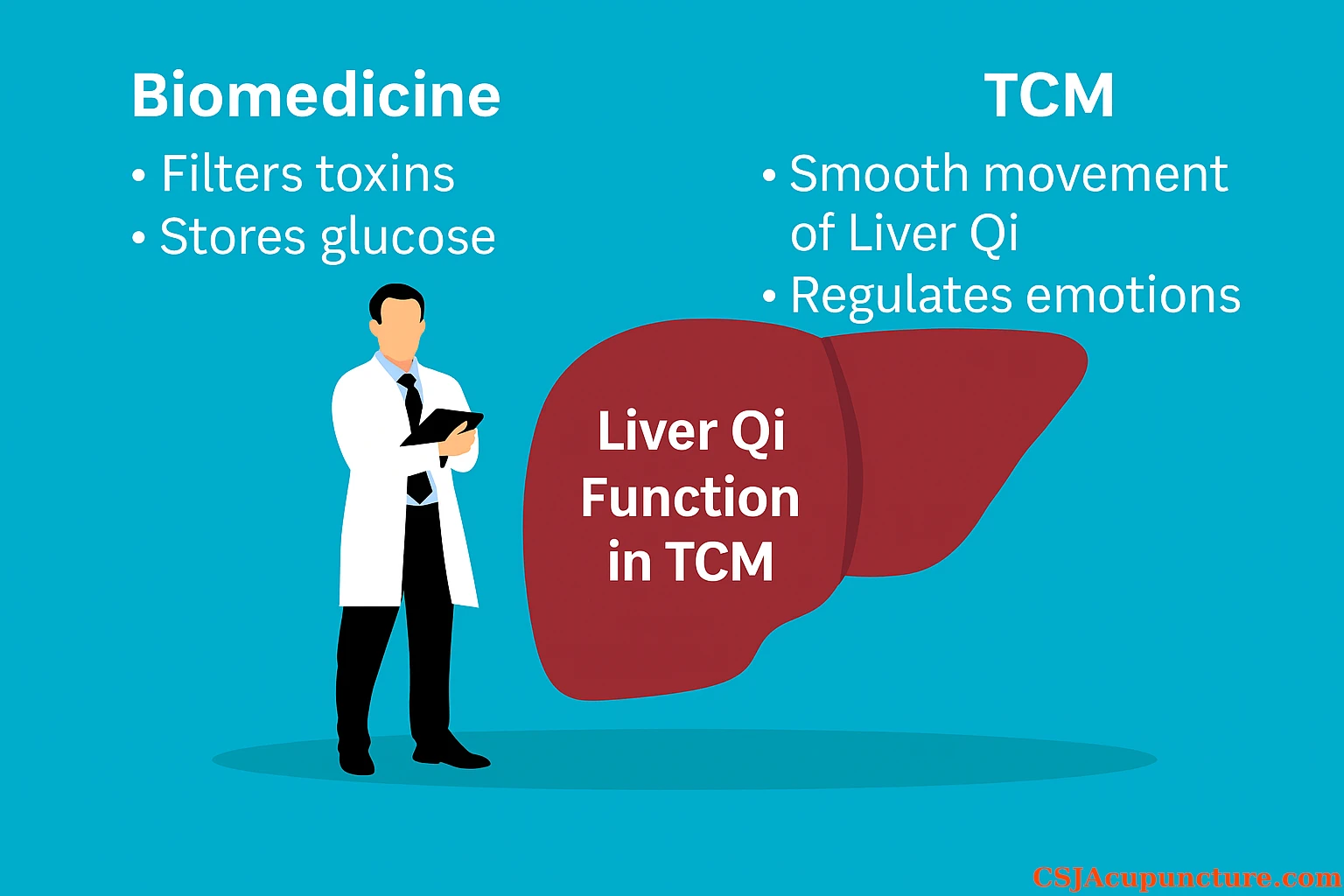
When we talk about the Liver, it’s important to recognize that Traditional Chinese Medicine (TCM) and biomedicine describe the same organ in completely different ways. Both systems work with the Liver, but each assigns it very different roles, relationships, and patterns. Understanding those differences is the foundation for understanding how TCM diagnosis works.
Table of Contents
The Liver in Biomedicine
Biomedicine classifies the liver as a large, essential organ made up of hepatocytes—specialized liver cells. These cells produce bile, filter blood, metabolize toxins, regulate nutrients, and support immune function. This is why conditions such as hepatitis literally translate to “inflammation of the liver,” as the disease process affects the hepatocytes themselves.
A few major biomedical functions include:1
• Filtering toxins
• Storing and releasing glucose
• Assisting in fat metabolism
• Processing medications and hormones
• Supporting immune activity
Anatomically, the liver sits above the gallbladder, and the two communicate through bile ducts, but they are considered separate organs with distinct roles.
The Liver in Traditional Chinese Medicine
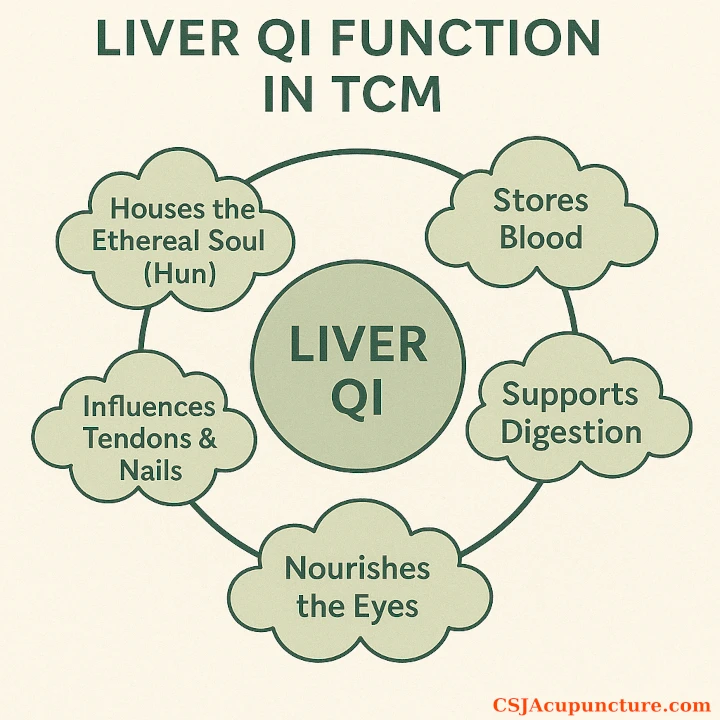
In TCM, the Liver has a much broader meaning. It is both a physical organ and an energetic system responsible for movement, regulation, and balance. This is why the Liver system in TCM explains symptoms that extend far beyond the physical liver itself.
The core function of the Liver in TCM is the smooth movement of Liver Qi. This is the idea that the Liver ensures the free flow of the body’s energy. Time never stops moving; neither does Liver Qi. It may stagnate, rise, or become imbalanced, but it does not halt completely.
Yin, Yang, and the Liver
The Liver is unique because it embodies both Yin and Yang qualities.
• It stores blood, which gives it a Yin function.
• It moves Qi, which gives it a Yang function.
This duality helps explain why the Liver system can present with so many different patterns—from deficiency to excess, from stagnation to rising Yang.
How Liver Qi Manifests in the Body
According to TCM theory, the Liver expresses itself through certain parts of the body:
• The eyes
• The fingernails
• Emotional regulation (through the ethereal soul, or Hun)
Red eyes, dry eyes, brittle nails, dizziness, and certain mood-related symptoms often relate to Liver patterns.
The Liver also influences other organ systems. Examples include:
• Helping the Spleen move and transform food
• Helping the Heart circulate blood
• Regulating the flow of Qi throughout the body
When Liver Qi moves smoothly, the body functions smoothly.
When it stagnates, symptoms begin to appear.
Liver Qi Stagnation and Modern Life
One of the most common TCM patterns today is Liver Qi stagnation. Stress, frustration, emotional suppression, irregular sleep, and overwork all impair the Liver’s ability to keep Qi moving.
Common manifestations include:
• Sighing
• Irritability
• Feeling “stuck” emotionally
• PMS or menstrual irregularity
• Digestive discomfort that worsens with stress
• A sensation of tightness in the chest or throat
• Depressive mood or low motivation
In TCM, these are not random or isolated complaints—they all stem from the same underlying pattern: blocked movement of Liver Qi.
The Color and Element of the Liver
The color associated with the Liver is green. In the Five Element theory, the Liver belongs to the Wood element. Wood grows, expands, and pushes upward—similar to the movement of Liver Qi.
This framework helps TCM practitioners understand symptoms that rise upward into the head, such as:
• Headaches
• Dizziness
• Red, irritated eyes
• Flushed face
• High blood pressure patterns (in TCM, this may stem from Liver Yang rising)
Again, these are pattern descriptions, not literal explanations of organ damage.
How the Liver and Emotions Connect
TCM recognizes the emotional dimension of the Liver. The ethereal soul (Hun) resides here, governing vision, direction, purpose, initiative, and emotional processing.
Excess stress, unresolved anger, frustration, or chronic tension can disturb the Liver system. Over time, this affects both emotional balance and physical function.
This internal connection helps explain why mood changes, irritability, or feeling “stuck in a knot” can accompany digestive symptoms, headaches, or other physical complaints.
Bringing It All Together
The Liver in biomedicine and the Liver in TCM describe different aspects of human health.
Biomedicine focuses on structure and chemical function.
TCM focuses on movement, regulation, emotional balance, and energetic flow.
Both perspectives are valuable. One explains the organ that detoxifies the blood; the other explains how stress affects digestion, mood, tension, and circulation. Together, they offer a more complete picture of how the body and mind interact.
- Kalra A, Yetiskul E, Wehrle CJ, et al. Physiology, Liver. [Updated 2023 May 1]. In: StatPearls [Internet]. Treasure Island (FL): StatPearls Publishing; 2025 Jan-. Available from: https://www.ncbi.nlm.nih.gov/books/NBK535438/ ↩︎

Jump-start your metabolism with the 21-Day Smoothie Diet! Replace meals with delicious, nutrient-packed smoothies that help burn fat, boost energy, and keep you feeling full. Start your transformation today →
Medical Disclaimer: This article is for informational and educational purposes only and is not a substitute for professional medical advice, diagnosis, or treatment. Always consult a qualified healthcare provider with any questions about a medical condition or treatment.