This post may contain affiliate links and ads in which we may earn a small percentage of purchases.
California acupuncturists received an important legislative update this month after AB 2497 was amended to remove dry needling language from the bill. According to a May 15 update from CSOMA, the change was announced during the May 14 Assembly Appropriations Committee hearing. CSOMA described the amendment as a legislative victory for California acupuncturists, students, patients, and professional advocates who contacted lawmakers, submitted letters, testified, and helped bring attention to the issue. 1
AB 2497 is a California bill concerning physical therapists. Earlier versions of the bill raised concerns in the acupuncture community because they included language involving tissue penetration with solid filiform needles, which many acupuncturists and professional organizations viewed as a dry needling scope expansion. The most recent official bill text, published May 18, 2026, shows amended language where “solid filiform needles” and treatment-related language were struck from the bill text.2
What Is AB 2497?
AB 2497, authored by Assembly Member Johnson, is titled “Physical therapists.” The bill proposes changes to the California Physical Therapy Practice Act, including updates to definitions, supervision rules, and the scope of physical therapy practice. The bill remains an active bill in the Assembly floor process, according to the California Legislative Information website.
The bill’s broader purpose is not limited to dry needling. It includes several proposed updates to how physical therapy is defined and regulated in California. However, the provision that drew strong attention from the acupuncture profession was the earlier language that would have included the use of solid filiform needles for tissue penetration. In practical terms, that language was understood by many in the acupuncture community as opening the door for dry needling by physical therapists.
A stainless-steel acupuncture pen and gua sha set.
 View Product
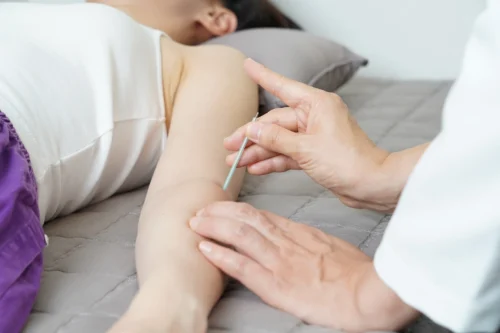
Dry needling generally refers to the insertion of thin filiform needles into muscular trigger points or related soft tissue structures. While dry needling is often described by physical therapy advocates as a musculoskeletal technique, many acupuncturists view it as a form of needle-based intervention that overlaps significantly with acupuncture practice. That distinction matters because acupuncture is a licensed health profession with its own educational, clinical, regulatory, and safety requirements.
What Changed in the Bill?
The key update is that the dry needling language was removed from AB 2497 after the May 14 Assembly Appropriations Committee hearing. The official bill history states that on May 14, the committee voted to amend the bill and pass it as amended, with 10 ayes and 2 noes. 3
In the May 18 amended version, the bill text still includes language related to electrode needles for tissue penetration for the purpose of evaluating and interpreting performance of the neuromusculoskeletal system. However, the phrase “and solid filiform needles” is struck from the relevant section. The word “treating” is also struck in the same section, narrowing the language from evaluating, interpreting, and treating to evaluating and interpreting.
For acupuncturists, that distinction is important. Solid filiform needles are the type of needles commonly associated with acupuncture and dry needling. Removing that language reduces the immediate concern that the bill would create a direct statutory pathway for physical therapists to perform dry needling without going through California’s acupuncture licensing structure.
Why This Was Significant for Acupuncturists
This update is significant because it touches on one of the most sensitive issues in modern acupuncture policy: scope of practice. Acupuncture is not simply the act of inserting a needle into the body. It is a regulated health profession that includes training in anatomy, point location, needling technique, safety, contraindications, diagnosis within the profession’s framework, and clinical decision-making.
From the acupuncture profession’s perspective, allowing another profession to perform needle insertion under a different name raises questions about public safety, informed consent, training standards, and regulatory oversight. Supporters of dry needling expansion often argue that physical therapists are already trained in anatomy and musculoskeletal care. Opponents argue that skin penetration with acupuncture-type needles requires specific training and regulatory standards because it carries risks, including bleeding, infection, nerve injury, and pneumothorax when performed in higher-risk anatomical regions.
The policy question is not only whether dry needling can be useful. The deeper question is who should be allowed to perform it, under what training standards, with what oversight, and with what disclosure to patients.
CSOMA’s Role in the Advocacy Effort
CSOMA, the California State Oriental Medical Association, is a professional association of licensed acupuncturists and supporters of acupuncture. The organization describes its mission as preserving, advancing, and integrating the art, science, and practice of acupuncture medicine into the modern healthcare model. CSOMA also states that it monitors legislative and regulatory matters at both the state and federal levels, follows California Acupuncture Board activity, and works on public policy issues affecting California acupuncturists.
In its May 15 update, CSOMA credited the result to coordinated community action. The organization thanked licensed acupuncturists, out-of-state practitioners, students, patients, the California Acupuncture Coalition, Niccolo De Luca, and Townsend Public Affairs for their advocacy. CSOMA also emphasized that the effort is not over, noting that dry needling scope expansion efforts may return in future legislative sessions.
This is an important point. Legislative outcomes are rarely permanent without continued attention. A bill can be amended, reintroduced, narrowed, expanded, or revived in a future session. For professional organizations, the work does not end when one amendment is adopted. It continues through monitoring, public education, coalition-building, and ongoing communication with lawmakers.
What This Means for Patients
For patients, this update reinforces the importance of understanding who is performing needle-based procedures and what type of license, training, and regulatory board governs that provider. Many patients may not know the difference between acupuncture and dry needling, especially because both may involve thin needles inserted into the body.
Licensed acupuncturists in California are regulated through the state’s acupuncture licensing system. Physical therapists are regulated through the Physical Therapy Board of California. These are separate professions with different scopes, different educational pathways, and different regulatory structures. When a procedure involves needle insertion, patients should be able to ask clear questions about training, risk, consent, and professional licensure.
The AB 2497 debate highlights a larger healthcare issue: access to care must be balanced with patient safety. Expanding access can be valuable, but it should not come at the cost of unclear standards or public confusion about regulated medical procedures.
What This Means Moving Forward
Moving forward, AB 2497 should continue to be monitored because the bill is still active. The current amendment removes the language that created the main dry needling concern, but the bill has not disappeared. It remains part of the legislative process, and future changes are still possible until the bill is finalized, passed, rejected, or otherwise resolved.
For California acupuncturists, the next step is continued professional engagement. That means staying informed, following CSOMA and other professional organizations, reviewing bill text directly, and contacting representatives when necessary. It also means educating patients and the public about the difference between acupuncture, dry needling, and other needle-based procedures.
This amendment also demonstrates that organized advocacy can matter. Letters, testimony, professional coalitions, and public education can influence how lawmakers understand healthcare policy. When a profession speaks with a clear and organized voice, it becomes harder for scope-related changes to move forward without scrutiny.
The removal of dry needling language from AB 2497 is a meaningful development for California’s acupuncture profession. It does not end the broader policy debate over dry needling, physical therapy scope, or acupuncture regulation, but it does show that legislative advocacy can protect professional standards and patient safety concerns.
For now, the acupuncture community can recognize this as an important step while remaining alert. Scope of practice debates often return in new forms, and the best response is continued vigilance, accurate public education, and professional unity.
At CSJ Acupuncture, we will continue following California acupuncture policy updates and sharing information that helps patients, practitioners, and the public better understand the evolving healthcare landscape.
References:
- California Legislative Information. AB-2497 Physical therapists. 2025-2026 Regular Session. https://leginfo.legislature.ca.gov/faces/billNavClient.xhtml?bill_id=202520260AB2497. Accessed May 19, 2026. ↩︎
- California Legislative Information. AB-2497 Bill History. 2025-2026 Regular Session. https://leginfo.legislature.ca.gov/faces/billHistoryClient.xhtml?bill_id=202520260AB2497. Accessed May 19, 2026. ↩︎
- California State Oriental Medical Association. Legislative Victory for Acupuncture in California. CSOMA newsletter. https://csoma.beehiiv.com/p/legislative-victory-for-acupuncture-in-california. May 15, 2026. ↩︎
Medical Disclaimer: This article is for informational and educational purposes only and is not a substitute for professional medical advice, diagnosis, or treatment. Always consult a qualified healthcare provider with any questions about a medical condition or treatment.